
Pilgrimage guides
Mansa Devi and Chandi Devi, Haridwar: Ropeway, Darshan and Visitor Tips
Visiting Mansa Devi and Chandi Devi in Haridwar? Learn about the ropeway vs walk, how to plan the day, and first-timer tips.
Ghumato Team · 6 min read · 26 Oct 2026
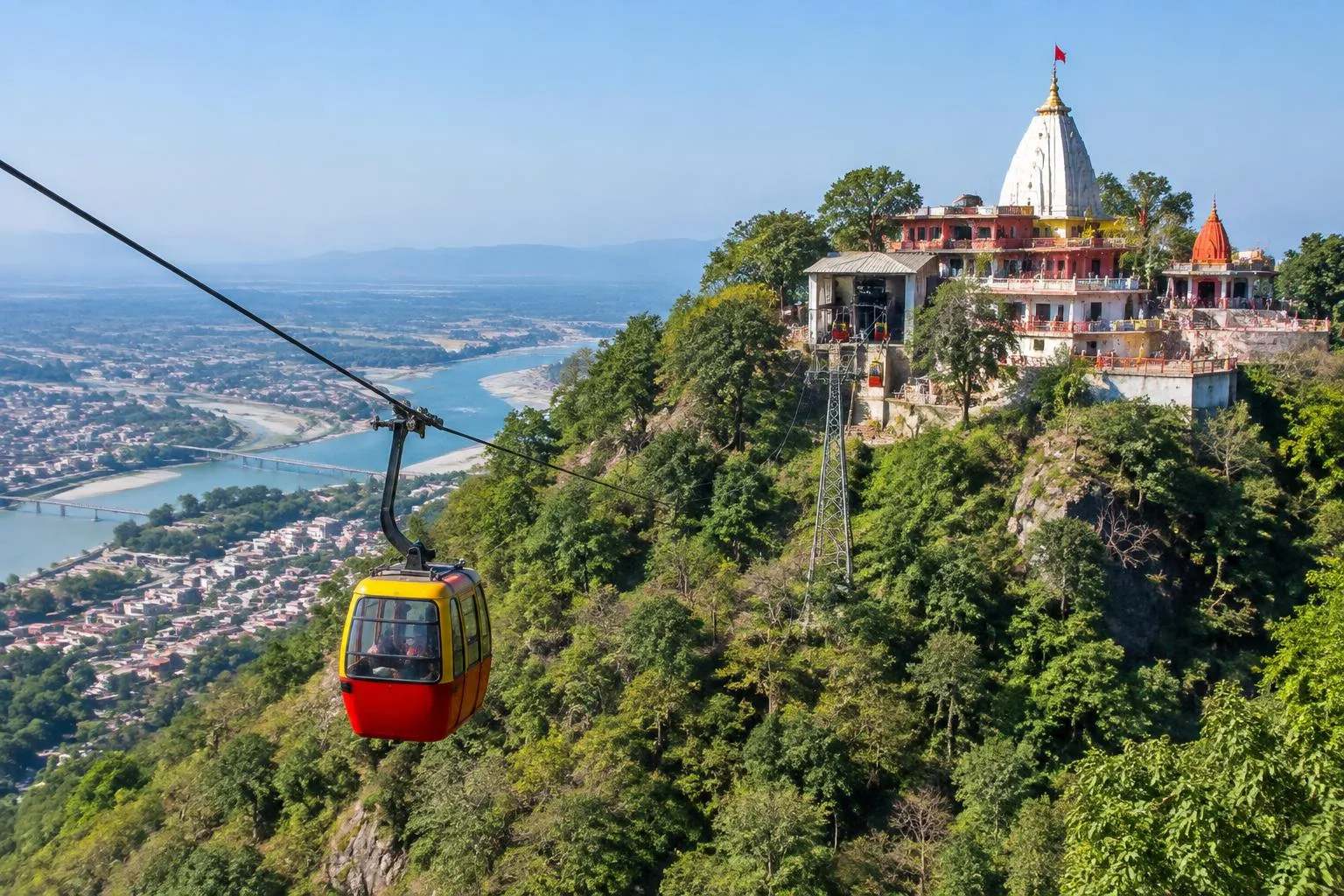
Above the ghats of Haridwar, two hills carry two of the town's best-loved temples. Mansa Devi sits on Bilwa Parvat on the town side of the river, and Chandi Devi sits on Neel Parvat on the far side. Both are dedicated to powerful forms of the Goddess, both draw devotees from across North India, and both offer sweeping views of the Ganga and the town below.
This guide explains what each temple is, how to reach them, how to plan the day and what to keep in mind as a first-time visitor.
Quick answer
Mansa Devi and Chandi Devi are two separate hilltop temples in Haridwar, each reached either by ropeway or on foot. Many visitors do both in a single day, usually in the morning or early afternoon, and then return to the ghats for the evening Ganga Aarti. Expect queues at the ropeway and the temples on weekends and festival days, and check current timings and ticket details locally before you go.
Mansa Devi Temple
Mansa Devi is revered as a goddess who fulfils the wishes of her devotees. Many visitors tie a sacred thread on a tree within the temple complex as a symbol of a wish, and return to untie it once the wish is fulfilled.
The temple is on Bilwa Parvat, part of the Shivalik range, and stands above the town. The walk up is a steady climb, and the ropeway offers a quicker alternative. From the top you get wide views over Haridwar and the river.
What to expect
- A busy temple complex with a queue for darshan, longer on weekends and during festivals
- Shops near the entrance selling prasad, offerings and souvenirs
- Open-air viewpoints with views over the town and the Ganga
- Monkeys around the complex, so keep food and loose items secure
Chandi Devi Temple
Chandi Devi is on Neel Parvat, on the opposite side of the river from the main town. It is dedicated to Goddess Chandi, a fierce form of the Goddess. The setting is a little quieter than Mansa Devi, and the hill is surrounded by greenery.
Like Mansa Devi, it can be reached by ropeway or on foot. The walking route is longer and steeper, so many visitors, especially families and seniors, prefer the ropeway.
What to expect
- A smaller, calmer temple compared with Mansa Devi, though it can still be crowded
- Good views over the river and the surrounding forest
- A longer overall time if you walk, so plan accordingly
Ropeway or walk?
Ropeway
- Effort: Low
- Time: Shorter, though queues can be long
- Best for: Families, seniors, short trips
- Views: Aerial views on the way
On foot
- Effort: Moderate to high, especially at Chandi Devi
- Time: Longer
- Best for: Fit travellers who enjoy a climb
- Views: Views at your own pace
If you travel in a group with children or older relatives, the ropeway is usually the more comfortable option. If you enjoy walking and have time, the climb adds to the experience, but start early to avoid midday heat.
Timings, tickets and queues
Temple hours and ropeway operating times can change with the season, festivals and maintenance. Ticket prices and any combined passes also change. We have not printed fixed hours or prices in this guide for that reason. Check with your hotel, your tour coordinator or the ropeway counters on the day.
Some general points
- Mornings are usually calmer than afternoons.
- Weekends, holidays and festival days bring long queues at both the ropeway and the temples.
- Allow extra time for the return queue, since many visitors leave at once.
How to plan the day
A comfortable plan for a first visit:
- Start with Mansa Devi in the morning, while it is cooler.
- Take a break for lunch and rest.
- Visit Chandi Devi in the afternoon.
- Return to the ghats and settle in for the evening Ganga Aarti.
Plan roughly half a day for the two temples if you take the ropeway, and longer if you walk or the queues are long.
Tips for visitors
- Dress modestly, and wear comfortable footwear for steps and uneven paths.
- Carry little. Many temples and ropeway stations restrict bags, and some items may need to be left outside, such as certain electronics or leather goods. Confirm the current rules before you go.
- Keep valuables and food secure, because monkeys are common around both hills.
- Carry water, especially in warm months, and a light layer in winter.
- Carry some cash for offerings, small purchases and local transport.
- Stay together in crowds, and agree on a meeting point before you enter.
- Be patient during peak hours. Queues move steadily but slowly.
- Respect the temple rules on photography and behaviour inside the sanctum.
Is it suitable for children and seniors?
Generally yes, with planning. The ropeway removes most of the climbing, which helps older travellers and young children. Avoid peak hours if possible, take breaks, and keep a flexible schedule. If someone has difficulty with heights, enclosed cabins or long queues, check what is comfortable for them before committing.
Frequently asked questions
Can I visit both temples in one day?
Yes. Many visitors do both, usually allowing a half day or more depending on queues.
Which temple should I visit if I only have time for one?
Mansa Devi is the more popular and easily accessible choice. Chandi Devi offers a quieter setting and more distant views.
Is there an entry fee for the temples?
Temple entry is generally free, but ropeway tickets are paid. Check current arrangements locally.
What is the best time of day to visit?
Early morning is typically calmer and cooler.
Can I walk instead of taking the ropeway?
Yes. Mansa Devi has a shorter walking route, while the walk to Chandi Devi is longer and steeper.
Visit both temples with Ghumato
Ghumato's 2-day, 1-night yatra from Delhi NCR includes the Mansa Devi and Chandi Devi ropeway darshan, along with the evening Ganga Aarti at Har Ki Pauri, with a tour coordinator travelling with the group. You can choose between a Standard and an Economy plan. See the details on the Haridwar & Rishikesh Yatra from Delhi page.
For more to see in Haridwar, read our Haridwar travel guide and our guide to the Ganga Aarti at Har Ki Pauri.